Even better, for a substantial program,use the Apache 2.0 license since it takes action against patent treachery. We urge you not to use the original BSD license for software youwrite. Theflaw is not fatal; that is, it does not render the software nonfree.But it does cause practical problems,including incompatibility with the GNU GPL. This license has been succeeded by the GNU AfferoGeneral Public License version 3; please use that instead. The new section, 2(d), covers betory casino bonus the distribution of applicationprograms through web services or computer networks. The lack of requirement to preserve copyright notices and the license noticedoes not necessarily mean it is safe to remove them.
- As far as it goes, it is a free software license, butincompatible with the GPL because it hasmany requirements that are not in the GPL.
- If you believe you have found a violation of one of our licenses,please refer to our licenseviolation page.
- This is a lax permissive non-copyleft free software license,compatible with the GNU GPL.
- We recommend using GNUTLS instead of OpenSSL in software you write.However, there is no reason not to use OpenSSL and applications thatwork with OpenSSL.
- These are far more common, andwidely recognized in the free software community.
- This is a copyleft free software license, incompatible with theGPL.
It is incompatible with the GNU GPL because it does notcontain the explicit GPL-compatibility clause ofthe basic CeCILL. It is incompatible with theGPL because it has requirements that are not present in the GPL. This license is also sometimes called the“4-clause BSD license”. This creates practical problems likethose of the original BSD license, including incompatibility with the GNUGPL. It has a fewrequirements that render it incompatible with the GNU GPL, such as strongprohibitions on the use of Apache-related names. It consists of the GNU GPLversion 2, with one additional section that Affero added with FSFapproval.
Versioning
We try to list the most commonly encountered free software license onthis page, but cannot list them all; we'll try our best to answerquestions about free software licenses whether or not they are listedhere. GNU also has additional compatibility and commentary about the use of other licenses with the GNU-GPL family of licenses. GNU.org has a compatibility chart and additional commentary for the different versions of GPL.
Thus, developers can'trely on this license to provide a strong copyleft. It also,indirectly, allows relicensing to GPL version 3, because there is away to relicense to the CeCILL v2, and the CeCILL v2 gives a way torelicense to any version of the GNU GPL. By itself, it has a copyleftcomparable to the GPL's, and incompatible with it. (If it madecompliance an actual condition of the license, it would not be a freesoftware license.) Unfortunately, its weak copyleftand choice of law clause make it incompatible with the GNU GPL.
GNU GPL License Terms
This makes it possible to use the Unicode v3license as a template to release other data or software underit. It differs from earlier versions as it does not include specificreferences to Unicode. Are covered by the Unicode Terms of Use, a different, nonfreelicense that appears on the same page but covers different files. As a result, if a piece of software was released underany version of the SGI Free License B, you can use it under the terms ofthis free version.
The license notices
It hassome attribution requirements which make it incompatible withGPLv2. Our comments about the Modified BSD licenseapply to this license too. This is the original BSD license with the advertising clause andanother clause removed. Our comments about the Zero-clause BSD license applyto this license. As the license is clearly based on the Expat License, we recommend tocall it the No-attribution Expat License (but please note that Expat has neverused this license). The difference between the X11 license and the Expat license isthat the X11 license contains an extra paragraph about using the XConsortium's name.
Why license notices?
It is also ambiguous, since the same people also callthe X11 license “the MIT License,”failing to distinguish them. It is based on the Apache License2.0; the scope of the patent license has changed so that whenan organization's employee works on a project, the organizationdoes not have to license all of its patents to recipients. It consists of the GPL, plus an exception allowing linking tosoftware not under the GPL.
We urge you not to use the ZPL version 1 for software you write.However, there is no reason to avoid running programs that have beenreleased under this license, such as previous versions of Zope. Of course, we urge you to avoid using nonfree software licenses, andto avoid using nonfree programs. This is a copyleft free software license, incompatible with the GPL.It is incompatible because it places extra restrictions onredistribution of modified versions that contradict the redistributionrequirements in the GPL.
Using Creative Commons and Open Software Licenses
This helps toavoid the confusion and antisocial effect described above. We recommend that developers choose alicense that clearly requires preserving notices for their own works because ofthe confusion and antisocial effect that is the result of the 0BSD License. There are currently several variants of XFree86, and only some ofthem use this license.
- This is not a free software license; it has several fatal flaws.
- If source code does not carry a license to give users the fouressential freedoms, then unless it has been explicitly and validlyplaced in the public domain, it is not free software.
- This is a permissive non-copyleft free software license.
- This is a free and copyleft license meant for general data.Please don’t use it for software or documentation, since it isincompatible with the GNU GPL and with the GNU FDL; however, it isfine to use for other kinds of data.
- Useof the source code is limited to research purposes.
- If a release has one statement that “This program is releasedunder license FOO,” in a central place such as the README file,that makes the situation clear for that release.
Licenses for Other Works
In GNU programs we conventionally put thelicense in a file called COPYING. This reallyhas nothing to do with the GNU GPL—it applies no matter whichfree software license you use to release the program. Previousversions of this license are also OK to use, but we do recommendupgrading to this version if you can. The Open Font License (including its original release, version 1.0)is a free copyleft license for fonts. It is acopyleft license because any larger work that includes part of thework you received must be released, as a whole, either under the samelicense or under a similar license that meets stated criteria.
Put all the copyrightnotices for a file together, right near the top of the file. The copyright symbol “©” can be included ifyou wish (and your character set supports it), but it's not necessary.There is no legal significance to using the three-character sequence“(C)”, but it does no harm. If several people helped write the code, use alltheir names. The copyright notice should include the year in which you finishedpreparing the release (so if you finished it in 1998 but didn't postit until 1999, use 1998). If you work, the best time to negotiate permission to release freesoftware is when negotiating your employment agreement. If you are not aresearch assistant or teaching assistant, it could be that the universityhas no claim to copyright on your work, but ask a lawyer to makesure of that.
Please note that a successor to Pine, Alpine, is released under the Apache License, version 2.0. This is not a free software license; it has several fatal flaws. In addition, if you are aUnited States citizen, please write to NASA and call for the use of atruly free software license. Microsoft has other licenses which it describes as “SharedSource”, some of which have different restrictions. This license certainlydoes not resolve these issues, but we do not elaborate about it here,as the license is nonfree already for reasons stated above.
Recent versions contain contract clausessimilar to the Open Software License, and should beavoided for the same reasons. This is a free software license, and compatible with the GPL. However, if you are looking for the best among lax, weak licenses, werecommend using the Apache 2.0 license among those. Contrary to its name, it is notbased on any of the BSD licenses, but on the ISC License,with the only difference being that it doesn't contain clauses that requirepreservation of copyright notices and the license notice.
It includesclauses such as “Each version of the Unicode Standard has furtherspecifications of rights and restrictions of use.” We recommend you use this license for any Perl 4 or Perl 5 packageyou write, to promote coherence and uniformity in Perl programming.Outside of Perl, we urge you not to use this license; it is better touse just the GNU GPL. This license is the disjunction of the Artistic License 1.0 and the GNU GPL—in other words,you can choose either of those two licenses. Check the license notices on the MPL-covered software before you makea Larger Work this way.
This is a permissive non-copyleft free documentation license that iscompatible with the GNU FDL. (The YaST software itself no longer uses this nonfree YaST license;happily, it is now free software, released under the GNU GPL.) Please don't use this license, andwe urge you to avoid any software that has been released underit. Recent versions of Squeak (from 4.0 on) are released under anExpat-style License with some portions of the codeunder the Apache License 2.0. This is not a free software license because it does not allowcommercial distribution of a modified version. Of course you should notuse this license, and we urge you to avoid any software that has beenreleased under it.


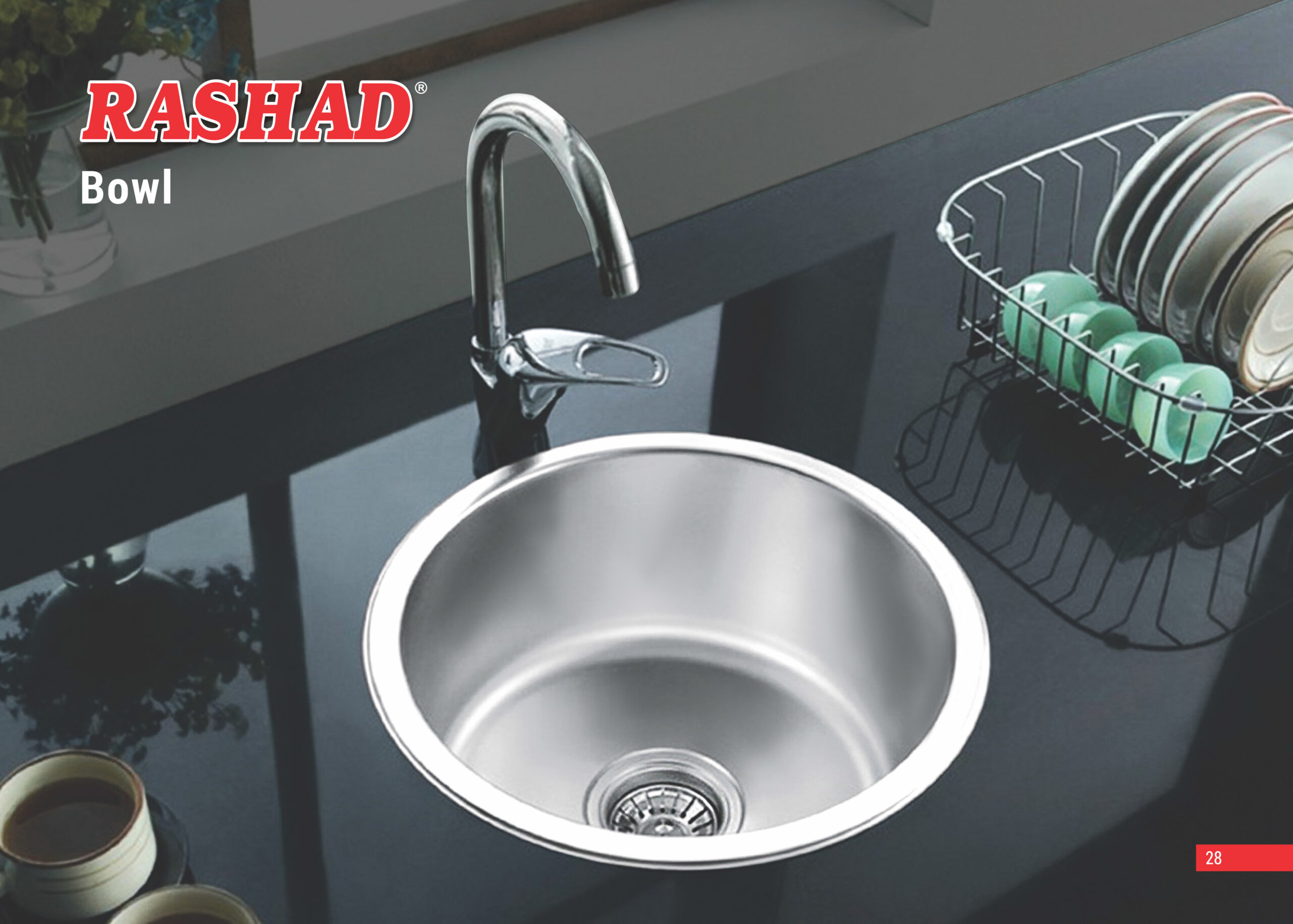
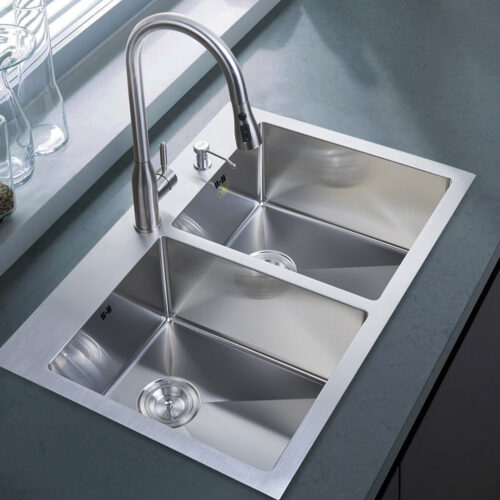
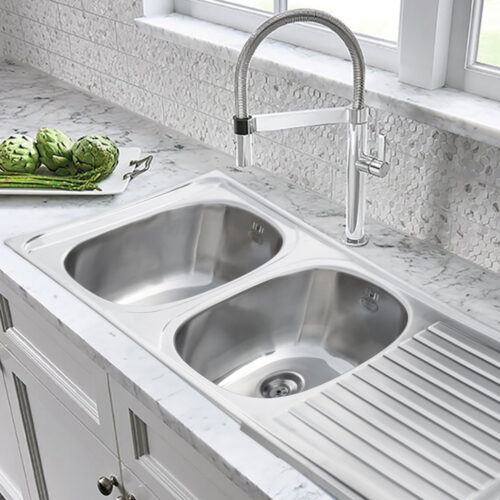
 Enhance Your Kitchen’s Beauty With are wide Variety of Kitchen Sinks. With 50 Years Of Experience, We Produce Sinks That Reflects True Craftmanship.